Earn Industry-Recognized Certifications
Our Electrical Technician program provides you with hands-on training and industry-recognized credentials to prepare you for entry-level technician roles at no cost to you! This course builds foundational safety knowledge, tool proficiency, and core electrical system skills aligned with NCCER standards, providing participants with practical experience in industry safety practices, electrical fundamentals, and code awareness. Upon successful completion, you will be prepared to earn the following certifications:
- OSHA 10-hour credential
- NCCER module certificates
We are no longer accepting applications for this program.
What is an Electrical Technician?
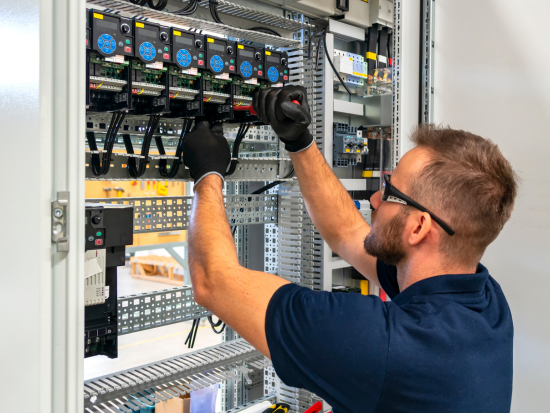
An Electrical Technician supports licensed journeymen by assisting with the installation of wiring, lighting, and power systems in residential, commercial, and light industrial settings. In this role, technicians use hand and power tools while continuing to build their knowledge of electrical systems, data communications, and industry standards. Some positions also focus on low-voltage and data-center related work, providing opportunities to develop specialized, in-demand technical skills while gaining hands-on experience in the electrical trade.
Classes have already started. Future dates and locations are TBD.
The Electrical Technician program is offered in-person over 10 weeks in the following location:
Guadalupe
Dates: June 1 - August 6
Days: Tuesday and Thursday
Times: 5:00 - 8:00 p.m.
Location: South Mountain Community College | 7050 S 24th St, Phoenix, AZ 85042
Job Outlook
According to the U.S. Department of Labor, approximately 81,000 openings for electricians are expected each year, on average, over the next decade.
You can find more information on the U.S. Bureau of Labor Statistics website.
Disclaimer
This publication was made possible by the Arizona Governor's Office of Youth, Faith and Family (GOYFF) in partnership with the Arizona Department of Economic Security (DES) through grant number GR-WIOA-GOYFF-100123-00. The views, opinions, or policies expressed belong solely to the author and do not reflect the official policy or position of the GOYFF, DES, Employment and Training Administration (ETA), or Department of Labor (DOL).